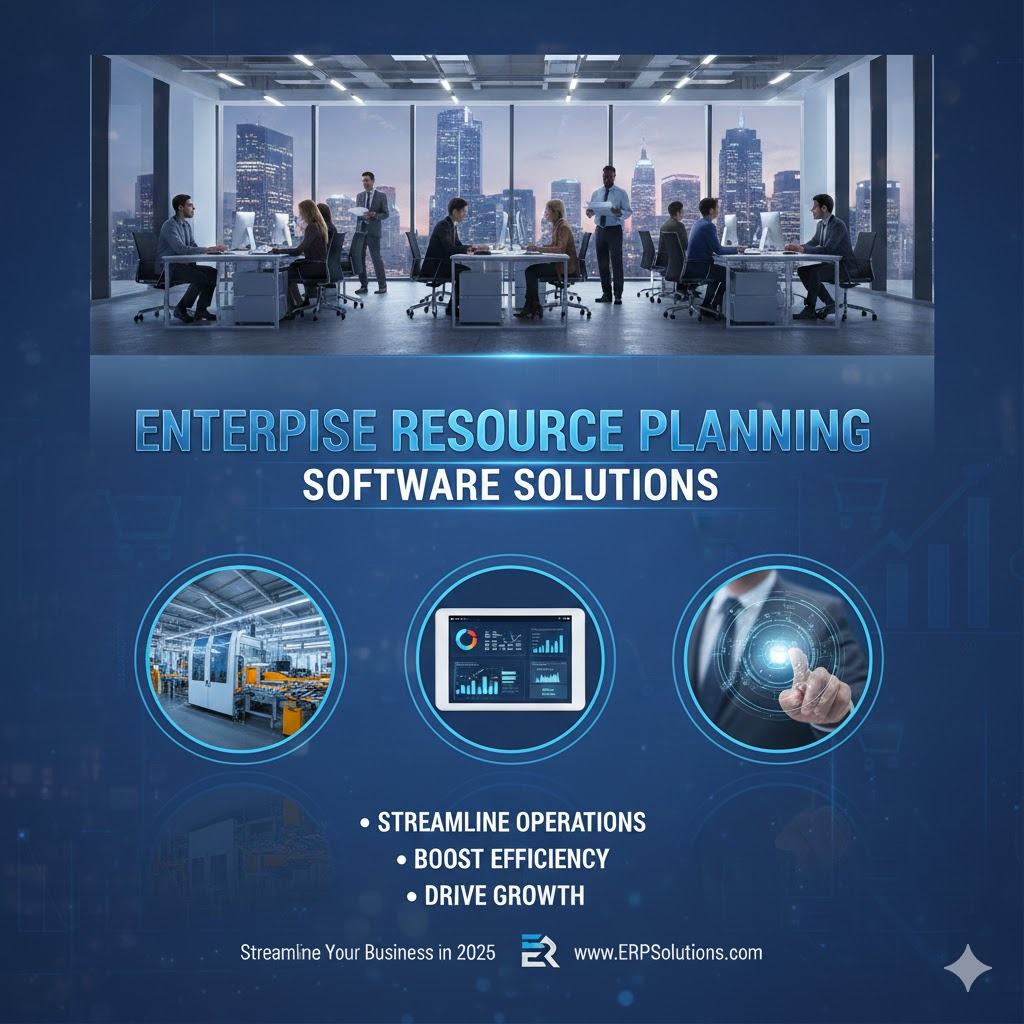
What Are Enterprise Resource Planning Software Solutions?
Enterprise Resource Planning (ERP) Software Solutions are comprehensive business management systems that integrate all essential business functions into a single digital platform. These functions include finance, human resources, supply chain, inventory management, customer relationship management, and more. By consolidating data and processes, ERP solutions help businesses operate more efficiently, reduce costs, and improve collaboration across departments.
In 2025, ERP software has become essential for businesses of all sizes. Cloud-based ERP solutions allow organizations to manage operations remotely, monitor performance in real-time, and make data-driven decisions without relying on multiple disconnected systems.
Why Businesses Need ERP Software Solutions
Modern businesses face challenges such as fragmented systems, data silos, and slow decision-making. ERP solutions address these issues by centralizing data and automating workflows. With ERP, managers can access real-time reports, track inventory levels, monitor employee performance, and analyze customer data from a single platform.
ERP solutions also support scalability. As companies grow, ERP systems adapt to handle larger volumes of data and more complex operations. For small and medium-sized businesses, cloud ERP reduces IT costs and minimizes the need for on-site infrastructure. By integrating all business functions, ERP solutions improve accuracy, productivity, and overall efficiency.
Basic Information Table
| Feature | Details |
|---|---|
| Software Type | Enterprise Resource Planning (ERP) |
| Primary Users | Businesses, Organizations, Enterprises |
| Key Modules | Finance, HR, CRM, Supply Chain, Inventory |
| Deployment | Cloud-based or On-premise |
| Benefits | Automation, Efficiency, Data Integration |
| Access | Desktop, Web, Mobile |
| Best For | SMEs to Large Enterprises |
How Enterprise Resource Planning Software Solutions Work
ERP software works by unifying all departments into a single system that communicates seamlessly. For example, when a sales order is placed, the ERP system updates inventory, triggers procurement if stock is low, generates invoices, and records the transaction in finance. This eliminates manual processes and ensures accurate data across the organization.
Cloud ERP solutions also allow real-time access to information. Managers and employees can log in from anywhere to monitor key performance indicators, generate reports, and collaborate with teams. Automation features, such as automated approvals, alerts, and workflow management, streamline tasks that would otherwise consume significant time and resources.
Key Features of ERP Software Solutions
The main features of modern ERP software include integrated financial management, HR management, supply chain optimization, and customer relationship management (CRM). Advanced ERP systems offer business intelligence tools, real-time analytics, and dashboards that provide actionable insights for decision-making.
Other features include workflow automation, inventory tracking, reporting and compliance tools, and mobile accessibility. Many ERP platforms also support third-party integrations, allowing businesses to connect with other software applications like e-commerce platforms, marketing tools, or logistics services.
Benefits of ERP Software Solutions
ERP solutions provide numerous benefits for businesses. Centralized data reduces errors and ensures consistency across departments. Automated workflows save time and resources, allowing employees to focus on strategic tasks rather than repetitive operations. Real-time analytics enable managers to make informed decisions quickly, helping businesses respond faster to market changes.
Additionally, ERP improves collaboration between departments, supports compliance with regulations, and enhances customer satisfaction by improving response times and service quality. Businesses that implement ERP systems often experience higher operational efficiency, cost savings, and improved growth potential.
External Resource
For more information about ERP systems and their benefits, visit:
https://www.cio.com/article/2438284/enterprise-resource-planning-erp-definition-and-solutions.html
Conclusion
Enterprise Resource Planning Software Solutions are no longer optional for modern businesses—they are a necessity. By integrating all core business functions into a single platform, ERP solutions help organizations streamline operations, reduce costs, and make data-driven decisions. With cloud-based options and advanced analytics tools, businesses can scale efficiently, improve productivity, and enhance overall performance.
Whether you run a small enterprise or a large corporation, adopting the right ERP software solutions in 2025 can transform your operations and provide a competitive edge in a fast-paced business environment.